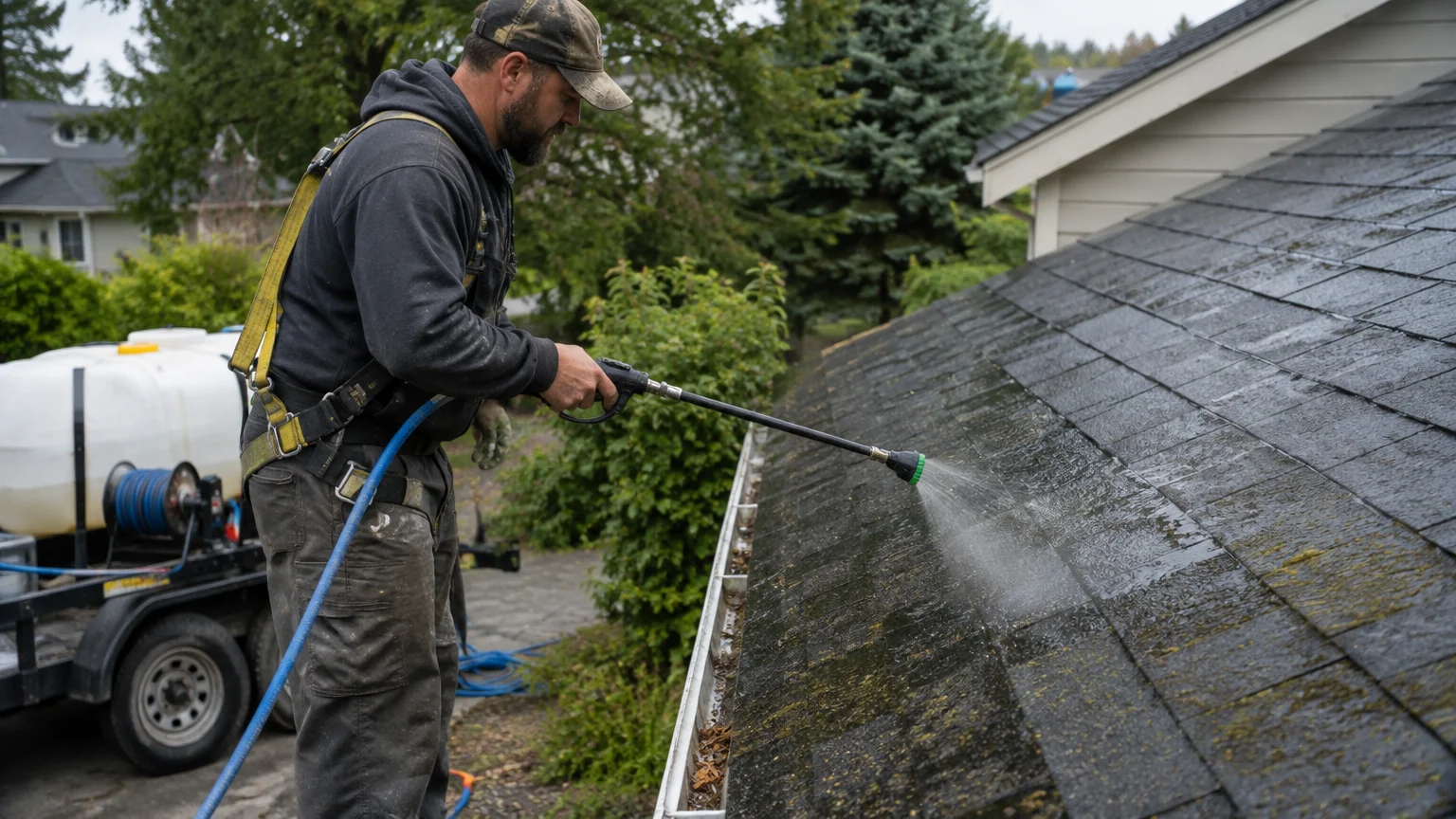
Soft washing a roof uses low pressure and cleaning solutions to remove algae, moss, black streaks, and dirt. Unlike strong pressure washing, it places less force on shingles and tiles. This makes soft washing a roof a safer choice for many homes in Orange Park while helping the roof look clean and cared for.
Table of Contents
- What Is Soft Washing a Roof?
- Why Is Soft Washing Safer Than Pressure Washing?
- Can Soft Washing Remove Black Streaks, Moss, and Algae?
- Is Soft Washing Suitable for Every Type of Roof?
- What Are the Benefits of Soft Washing a Roof?
- Should You Soft Wash a Roof Yourself or Hire a Professional?
- How Often Should a Roof Be Soft Washed?
What Is Soft Washing a Roof?
Soft washing a roof is a cleaning method that uses low water pressure and a roof-safe solution. The solution loosens algae, moss, mildew, and stains. Low pressure then rinses away the loosened material without blasting the roof surface.
Soft washing works differently from regular pressure washing. Pressure washing depends mostly on strong water force. Soft washing lets the cleaning solution do most of the work. This makes it useful for shingles, tiles, and other surfaces that may crack, lift, or lose protective granules.
How does the soft washing process work?
A trained technician first checks the roof, gutters, vents, flashing, plants, and drainage areas. Loose debris may be cleared before cleaning starts. Plants and other sensitive areas should be covered or rinsed before the solution is applied.
The cleaning solution is spread across the affected areas. It breaks down algae, mildew, moss, and dirt. The technician lets it work before rinsing with controlled pressure. The method may change based on the roof material, slope, weather, and type of growth.
What types of roof stains and growth can it remove?
Soft washing can treat many common roof problems, including:
- Black streaks caused by algae growth
- Moss and lichen attached to shingles or tiles
- Dirt, dust, pollen, and surface grime
- Bird waste and light organic debris
- Green stains beneath trees or in shaded areas
A cleaning visit may also reveal damaged shingles, loose tiles, blocked gutters, or worn flashing. Cleaning does not fix these problems. A roofer should check any damage that affects the home’s water protection.
Why Is Soft Washing Safer Than Pressure Washing?
Soft washing is often safer because it uses less force against roofing materials. Strong water pressure can remove granules from asphalt shingles. It can also push water beneath shingles, crack old tiles, or damage seals around roof parts.
A roof is not like a concrete driveway. A driveway may handle strong pressure. Roofing materials protect the home from rain, wind, and sun. They need a gentler cleaning method.
How can high pressure damage shingles and tiles?
High pressure may lift shingle edges or remove the small granules on top. These granules help protect shingles from sunlight and weather. When they are lost, the roof may wear sooner.
Pressure can also crack clay, concrete, or older roof tiles. Water may enter below a tile or shingle when the spray comes from the wrong direction. Hidden moisture can later cause leaks, wood damage, or mold inside the roof system.
A pressure washer can create safety risks, too. A strong spray may knock someone off balance on a wet roof. It can also damage gutters, skylights, vents, solar equipment, siding, windows, or painted trim.
What makes low-pressure cleaning safer for roofing materials?
Low-pressure cleaning places less force on the roof. The cleaning solution handles much of the work. A careful rinse removes residue without treating the roof like a hard driveway.
Still, every roof needs its own plan. A technician may change the solution, pressure, rinse pattern, and work area. Pressure Washing Orange Park can help Orange Park property owners choose a method based on the roof’s age, material, and condition. The plan matters more than the name of the machine.
Can Soft Washing Remove Black Streaks, Moss, and Algae?
Yes, soft washing can remove many black streaks, moss patches, and algae stains. It treats the organic growth instead of only blasting the surface. The roof may look cleaner after rinsing, and some deeper growth may fade as the solution keeps working.
What causes black streaks on roof shingles?
Black streaks often come from algae growing on damp roof surfaces. They are common in shaded areas or places that receive less direct sun. Nearby trees may add leaves, pollen, moisture, and other material that helps algae grow.
The streaks may look like simple dirt, but hard scrubbing can harm shingles. A suitable roof cleaning solution can loosen the growth with less force. Cleaning still needs care around gutters, plants, vents, and painted surfaces.
How does soft washing treat organic growth?
The solution reaches the growth and breaks down the material holding it to the roof. Moss needs extra care because its roots can grip the shingle surface. Pulling moss away by force may pull at shingles and expose the roof below.
Soft washing may not remove every old mark at once. Some stains fade over time after treatment. Thick moss, heavy lichen, damaged shingles, or long-term stains may also call for a roof inspection.
Homeowners should not mix household cleaners or pour strong chemicals onto a roof. The wrong mix can harm plants, metal, paint, pets, or people. Product labels and roof material instructions should guide all cleaning work.
Is Soft Washing Suitable for Every Type of Roof?
Soft washing works well for many homes and businesses, but no method suits every roof. The roof material, age, slope, damage, sealants, and past repairs all affect the plan. The roof should be checked before water or cleaning solution is used.
Which roof materials can be soft washed?
Soft washing is often used on asphalt shingles, concrete tiles, clay tiles, and some metal roofs. It may also suit other roofing materials when the solution and rinse pressure are adjusted correctly.
Older roofs need extra care. Brittle shingles may break when someone walks on them or rinses them. Loose tiles may move. Faded coatings may react badly to the wrong cleaner. A technician should know which products fit the roof material.
When might a roof need a different cleaning approach?
A badly damaged roof may need repair before cleaning. Missing shingles, open seams, broken tiles, exposed underlayment, or serious leaks should not be covered by a cleaning visit. A roofer may need to check the roof first.
Solar panels need their own care, too. Cleaning around them requires attention to wiring, mounts, glass, and drainage. Homeowners asking who cleans solar panels in Orange Park should choose a provider trained for that work. Panels should not be treated like roof shingles.
Steep roofs, weak roof decks, and hard-to-reach areas may need professional equipment. Pressure Washing Orange Park serves the main Orange Park area, including Doctors Lake, Bellair-Meadowbrook Terrace, Fleming Island, Middleburg, Lakeside, Green Cove Springs, and nearby communities. The team can help identify when roof cleaning fits and when another trade should check the surface.
What Are the Benefits of Soft Washing a Roof?
Soft washing can improve a roof’s appearance and remove growth that holds moisture. It may also help property owners notice roof problems sooner. A clean roof can make the whole home look more cared for, especially when dark streaks stand out against light shingles.
How can roof cleaning improve appearance and maintenance?
Removing algae, moss, and dirt can give the roof a more even color. It may also reduce loose organic material that slides into gutters during rain. Clean gutters help move water away from the roof edge and walls.
Roof cleaning gives a technician a clearer view of the surface. They may notice lifted shingles, cracked tiles, worn flashing, or blocked drainage points. These findings do not mean cleaning caused the damage. They may show problems that dirt or growth had hidden.
The same idea applies to other exterior surfaces. Pressure Washing Services may suit hard surfaces such as driveways or some patios. Soft washing may suit delicate siding, stucco, and roofing. The right method depends on the surface, not just how dirty it looks.
Can soft washing help extend the useful life of a roof?
Soft washing may help by removing growth that holds moisture against roofing materials. It can also reduce the need for hard scrubbing or strong pressure. Cleaning cannot stop normal aging, storm damage, poor airflow, or failed roofing materials.
Roof care should also include safe ground checks, clear gutters, trimmed branches, and quick attention to leaks. Homeowners should never walk on a roof that feels unsafe. A clean roof is helpful, but it cannot replace repairs or a new roof when those are needed.
Should You Soft Wash a Roof Yourself or Hire a Professional?
Homeowners can handle some basic roof upkeep from the ground. They can remove leaves from reachable gutters with safe tools, trim branches away from the roof, and look for stains, missing shingles, or sagging areas. They should not climb a steep or wet roof to clean it.
What risks come with DIY roof cleaning?
Roof cleaning may involve falls, slippery surfaces, strong solutions, hidden damage, and electrical equipment. A ladder can slip or rest against weak gutters. Strong pressure may damage shingles, tiles, flashing, siding, windows, and plants.
A homeowner may also spread a cleaning solution unevenly. Runoff can harm grass, flowers, pets, or nearby water. Mixing cleaners can create harmful fumes or damage the roof. Product labels should be followed, and safety gear should match the product instructions.
DIY work may be fine for ground-level debris removal and simple visual checks. Professional help is the better choice for steep roofs, chemical use, solar panels, overhead work, and hard-to-reach areas.
What should homeowners look for in a roof cleaning service?
A dependable provider should explain the cleaning method before work begins. Ask if the team has worked on the roof material. Ask how plants and runoff will be protected. Also ask how damaged areas will be handled.
Homeowners should look for proof of insurance, safe ladder use, trained workers, and a written work description. Pressure Washing Orange Park can explain roof cleaning options and when soft washing is suitable. The final quote should confirm the work after the roof and access needs are reviewed.
How Often Should a Roof Be Soft Washed?
There is no single schedule for every roof. Many roofs need attention when growth returns or when shade and moisture keep the surface damp. A roof in an open, sunny place may stay clean longer than one beneath trees.
What signs indicate that a roof needs cleaning?
Common signs include dark streaks, green patches, moss, lichen, heavy leaves, and dirty roof edges. Water may also drain slowly when organic material blocks nearby gutters. From the ground, homeowners can watch for stains spreading across more roof sections.
A dirty-looking roof should still be checked before cleaning. Brittle shingles, broken tiles, loose flashing, or active leaks need careful review. Cleaning may need to wait until repairs are complete.
How do weather, shade, and nearby trees affect cleaning frequency?
Shade slows drying after rain. Trees add leaves, pollen, sap, and small branches. Humid weather can keep roof surfaces damp longer. These conditions often support algae, moss, and mildew growth.
Homeowners can limit buildup by trimming branches safely, keeping gutters clear, and checking drainage after storms. They should not clean a roof simply because a neighbor did. The right time depends on the property and roof condition.
Key takeaways
- Soft washing uses cleaning solutions and low pressure for roof care.
- Strong pressure can damage shingles, tiles, flashing, and roof coatings.
- Black streaks often come from algae on damp or shaded shingles.
- DIY work is safest from the ground, not on steep or wet roofs.
- Shade, trees, moisture, and roof condition affect cleaning needs.
Frequently Asked Questions
Is soft washing better than pressure washing for roof shingles?
Soft washing is often better for roof shingles because it relies on cleaning solution instead of strong force. High pressure may remove protective granules or push water below shingles. The safest method still depends on the roof’s age, condition, slope, and maker’s guidance.
Can soft washing damage plants around the house?
Cleaning solutions can harm plants when they are not protected. A careful crew should cover sensitive plants, control runoff, and rinse nearby landscaping when needed. Keep pets and children away from the work area until the roof and nearby surfaces are safe.
How long does a soft-washed roof stay clean?
Results depend on shade, rain, nearby trees, roof condition, and the type of growth. Roofs in damp, shaded areas may show new growth sooner. Ground checks and clear gutters can help owners notice buildup before it spreads.
Can soft washing remove all moss from a roof?
Soft washing can treat and remove much of the moss, but thick growth needs extra care. Pulling moss away by force may damage shingles. A technician should check for trapped moisture, lifted shingles, and damage before choosing the next step.
Should a homeowner clean a roof with a pressure washer?
Most homeowners should not use a pressure washer on a roof without proper training. Strong spray can damage shingles, tiles, flashing, gutters, and nearby surfaces. Ground-level upkeep is safer. Professional help is wise for steep roofs, chemical use, solar panels, and difficult areas.
A clean roof can help a property look cared for, but safe methods matter most. Soft washing a roof treats stains and organic growth without harsh force. For roof care in Orange Park, Contact us to discuss the right cleaning approach for your property.
If you are not sure what you are dealing with, it is worth having someone look at it before it turns into a bigger job. Get in touch with Pressure Washing Orange Park today and we will tell you where you stand.